Hanafi Inheritance Rules: A Complete Faraid Guide
What Is the Hanafi Madhab?
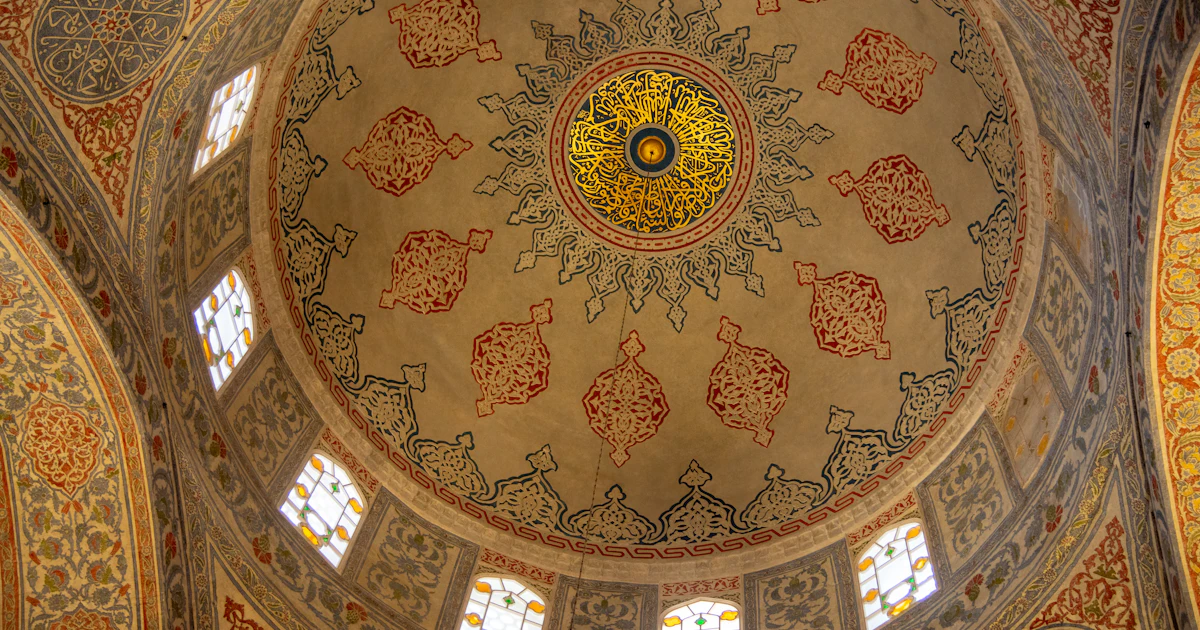
The Hanafi madhab is the oldest and most widely followed of the four Sunni schools of Islamic jurisprudence. Founded by Imam Abu Hanifa al-Nu'man ibn Thabit (699–767 CE) in Kufa, Iraq, it is followed today by the majority of Muslims in Turkey, Central Asia, South Asia (Pakistan, India, Bangladesh, Afghanistan), and significant communities in Egypt, the Levant, and South Africa's South Asian Muslim population.
Imam Abu Hanifa was renowned for his systematic use of legal reasoning (qiyas) and scholarly opinion (ra'y) alongside the Quran and Sunnah. This methodological strength made the Hanafi school the official madhab of the Ottoman Empire for over six centuries, leaving a deep institutional legacy across the Muslim world.
In the science of inheritance (Ilm al-Fara'id), the Hanafi school shares the same Quranic foundation as all four madhabs — the fixed shares defined in Surah An-Nisa 4:11–12 and 4:176 are identical across all schools. The differences lie in a small number of edge cases where scholarly interpretation diverges.
The Shared Quranic Foundation
Before examining what makes the Hanafi school distinctive, it is important to establish what all four madhabs agree on — which is the overwhelming majority of Faraid rules:
- All six fixed shares: 1/2, 1/4, 1/8, 2/3, 1/3, 1/6
- Spousal shares: husband 1/2 or 1/4; wife/wives 1/4 or 1/8
- Daughter's shares: 1/2 (one daughter, no son); 2/3 shared (two or more daughters, no son)
- Parents' shares: father 1/6 + residue when children present; mother 1/6 or 1/3
- The 2:1 son-to-daughter ratio when inheriting as residuary heirs
- The order of estate settlement: funeral costs → debts → Wasiyyah → Faraid
- Awl (proportional reduction when shares exceed 1)
- The principle that Radd does not go to a spouse — except in the Maliki school
يُوصِيكُمُ اللَّهُ فِي أَوْلَادِكُمْ ۖ لِلذَّكَرِ مِثْلُ حَظِّ الْأُنثَيَيْنِ ۚ فَإِن كُنَّ نِسَاءً فَوْقَ اثْنَتَيْنِ فَلَهُنَّ ثُلُثَا مَا تَرَكَ
"Allah instructs you concerning your children: for the male, what is equal to the share of two females. But if there are only daughters, two or more, for them is two-thirds of what he left." (Surah An-Nisa 4:11)
Hanafi Fixed Shares: The Full Reference Table
The following table summarises every fixed share in Hanafi Faraid. These are identical to all other madhabs except where noted.
| Heir | Share | Condition |
|---|---|---|
| Husband | 1/2 | Wife had no children |
| Husband | 1/4 | Wife had children |
| Wife / Wives | 1/4 shared | Husband had no children |
| Wife / Wives | 1/8 shared | Husband had children |
| Single daughter | 1/2 | No son present |
| 2+ daughters | 2/3 shared | No son present |
| Single granddaughter | 1/2 | No son, no daughter, no grandson |
| Granddaughter (supplementary) | 1/6 | Alongside exactly 1 daughter, no grandson |
| Father | 1/6 + residue | Children present (takes fixed share + Asabah) |
| Father | Full Asabah | No children (takes all residue) |
| Mother | 1/3 | No children AND fewer than 2 siblings of deceased |
| Mother | 1/6 | Children present, OR 2+ siblings of deceased present |
| Paternal grandfather | 1/6 + residue | Father absent, children present |
| Paternal grandfather | Full Asabah | Father absent, no children |
| Paternal grandmother | 1/6 | Mother absent (Hanafi: maternal grandmother also gets 1/6 if no mother) |
| Full sister | 1/2 | No son, no father, no grandfather, no full brother, no daughter |
| 2+ full sisters | 2/3 shared | Same conditions as above |
| Uterine sibling (1) | 1/6 | No children, no father, no grandfather, no full/paternal siblings |
| Uterine siblings (2+) | 1/3 shared | Same conditions as above |
The Defining Hanafi Rule: Grandfather Blocks All Siblings
This is the most important and distinctive rule in Hanafi inheritance jurisprudence. When a paternal grandfather is alive at the time of death, he completely blocks all siblings of the deceased from inheriting — full brothers, full sisters, paternal half-brothers, paternal half-sisters.
Under the Hanafi school:
- The grandfather steps into the father's position and takes his place entirely
- All siblings — regardless of how many — receive nothing
- The grandfather takes the full Asabah (residue) as if he were the father
How Other Madhabs Handle This Differently
The Maliki, Shafi'i, and Hanbali schools apply a different principle called muqasama (co-sharing): the grandfather inherits alongside siblings but is guaranteed to receive no less than 1/3 of the estate. The calculation chooses whichever is more beneficial for the grandfather:
- 1/3 of the entire estate, or
- His share through muqasama (treating him as a brother and dividing the residue)
In practice this means siblings in the Maliki/Shafi'i/Hanbali schools receive a share when the grandfather is alive, whereas in the Hanafi school they are completely shut out.
| Scenario: Grandfather + 2 Full Brothers + Wife | Hanafi | Maliki / Shafi'i / Hanbali |
|---|---|---|
| Wife | 1/4 | 1/4 |
| Grandfather | 3/4 (full residue) | ≥ 1/3 via muqasama |
| Full Brothers (each) | Nothing — blocked | Share the remaining residue |
Hanafi Rules on Radd (Return of Surplus)
Radd occurs when fixed shares total less than the whole estate and no residuary heir (Asabah) exists to claim the remainder. The Hanafi position:
- Radd does not go to the spouse. If a wife is the only heir and no other heirs exist, the surplus after her 1/4 or 1/8 goes to the Bayt al-Mal (public treasury) — not back to her.
- Radd is distributed among all other fixed-share heirs proportionally to their original shares.
- The Maliki madhab alone gives Radd to the spouse. This is the primary Radd-related difference between madhabs.
Radd Example Under Hanafi: Mother + Wife, No Other Heirs
Net estate: R 400,000. Heirs: Wife (1/4 = R 100,000), Mother (1/3 = R 133,333). No children, no father, no siblings.
Fixed shares total: 1/4 + 1/3 = 7/12. Remainder = 5/12 = R 166,667. No Asabah exists.
- Hanafi: Surplus R 166,667 returned to Mother only (wife excluded from Radd). Mother receives 1/3 + Radd = R 133,333 + R 166,667 = R 300,000. Wife keeps R 100,000. Total = R 400,000 ✓
- Maliki: Surplus R 166,667 split proportionally between Wife and Mother based on their original shares (3:4 ratio). Both benefit from Radd.
Hanafi Rules on Awl (When Shares Exceed the Estate)
All four madhabs handle Awl identically. When the sum of all fixed shares exceeds 1 (the whole estate), the common denominator is raised to match the sum of all numerators, and every heir's share is reduced proportionally. No madhab gives any heir priority over another during Awl — all shares shrink equally.
Awl Example: Husband, Two Sisters, Mother
Net estate: R 480,000.
| Heir | Original Share | Numerator | After Awl (÷ 9) | Amount |
|---|---|---|---|---|
| Husband | 1/2 | 3/6 | 3/9 = 33.33% | R 160,000 |
| 2 Full Sisters | 2/3 | 4/6 | 4/9 = 44.44% | R 213,333 |
| Mother | 1/6 | 1/6 | 1/9 = 11.11% | R 53,333 |
| Original total: 1/2 + 2/3 + 1/6 = 3/6 + 4/6 + 1/6 = 8/6 — exceeds 1, Awl raises to 9 | 9/9 = 100% | R 426,666 | ||
Wait — R 426,666 ≠ R 480,000. Let me recalculate correctly: 3/9 × 480,000 = R 160,000; 4/9 × 480,000 = R 213,333; 1/9 × 480,000 = R 53,333. Total = 160,000 + 213,333 + 53,333 = R 426,666. But 3+4+1 = 8, not 9. The original fractions sum to 8/6, so Awl denominator is 8 (not 9). Each heir's numerator out of 8: Husband 3/8, Sisters 4/8, Mother 1/8.
| Heir | Original Share | After Awl (÷ 8) | Amount (R 480,000) |
|---|---|---|---|
| Husband | 1/2 = 3/6 | 3/8 = 37.5% | R 180,000 |
| 2 Full Sisters | 2/3 = 4/6 | 4/8 = 50% | R 240,000 |
| Mother | 1/6 = 1/6 | 1/8 = 12.5% | R 60,000 |
| Total | 8/6 → Awl → 8/8 | 100% | R 480,000 ✓ |
Hanafi Rules on Grandmothers
The Hanafi school has a distinctive and generous position on grandmothers: both the paternal grandmother and the maternal grandmother may receive 1/6, subject to the following:
- The paternal grandmother inherits 1/6 when the father is absent (she is blocked by the father)
- The maternal grandmother inherits 1/6 when the mother is absent (she is blocked by the mother)
- If both grandmothers survive and both are eligible, they share the 1/6 equally (3/36 each)
- A grandmother is blocked by any lineal ancestor closer to the deceased — father blocks paternal grandmother; mother blocks maternal grandmother
The Hanafi school uniquely extends 1/6 to great-grandmothers (the grandmother's mother) through established chains of ascent, as long as no closer female ancestor survives.
Uterine Siblings in Hanafi Law
Uterine siblings (maternal half-brothers and sisters, ikhwa li umm) inherit under all four madhabs with identical shares:
- 1/6 for a single uterine sibling
- 1/3 shared for two or more uterine siblings
Uterine siblings only inherit when:
- No children or grandchildren (through a son) survive
- No father or paternal grandfather survives
- No full brothers or paternal half-brothers are present (in most madhab applications)
Uniquely, uterine siblings are unaffected by the Hanafi grandfather rule — the grandfather does not block uterine siblings, because uterine siblings trace their lineage through the mother's side, not the paternal line that the grandfather represents.
Hanafi vs Other Madhabs: Key Differences Summary
| Issue | Hanafi | Maliki | Shafi'i | Hanbali |
|---|---|---|---|---|
| Grandfather + siblings | Grandfather blocks all siblings completely | Muqasama — grandfather shares, gets ≥ 1/3 | Muqasama — grandfather shares, gets ≥ 1/3 | Muqasama — grandfather shares, gets ≥ 1/3 |
| Radd to spouse | No — spouse excluded from Radd | Yes — spouse receives Radd | No — spouse excluded from Radd | No — spouse excluded from Radd |
| Maternal grandmother | Gets 1/6 (shared if both grandmothers present) | Gets 1/6 | Gets 1/6 | Gets 1/6 |
| Awl | Applies — all shares reduced proportionally | Applies | Applies | Applies |
| Wasiyyah cap | Max 1/3 to non-heirs | Max 1/3 | Max 1/3 | Max 1/3 |
Worked Hanafi Example: Estate with Grandfather and Siblings
This example illustrates the most important Hanafi distinction — the grandfather blocking siblings.
Deceased: Male. Survived by: Wife, Mother, Paternal Grandfather, 2 Full Brothers, 1 Full Sister. Net estate: R 720,000.
Under Hanafi Rules:
| Heir | Share | Amount | Note |
|---|---|---|---|
| Wife | 1/4 (no children) | R 180,000 | Fixed Quranic share |
| Mother | 1/6 (grandfather present counts as 2+ siblings) | R 120,000 | Reduced due to siblings-equivalent |
| Grandfather | Residue (Asabah) | R 420,000 | Takes all residue — blocks brothers and sister |
| 2 Full Brothers | Nothing | R 0 | Completely blocked by grandfather |
| Full Sister | Nothing | R 0 | Completely blocked by grandfather |
| Total | 100% | R 720,000 ✓ |
Under Maliki / Shafi'i / Hanbali (Muqasama):
| Heir | Share | Amount |
|---|---|---|
| Wife | 1/4 | R 180,000 |
| Mother | 1/6 | R 120,000 |
| Residue for grandfather + siblings | 1 − 1/4 − 1/6 = 7/12 | R 420,000 |
| Grandfather gets ≥ 1/3 of estate via muqasama | ≥ R 240,000 | R 240,000 |
| 2 Full Brothers + 1 Full Sister share remainder | R 180,000 ÷ 5 parts (2+2+1) | R 72,000 / R 72,000 / R 36,000 |
| Total | 100% | R 720,000 ✓ |
The difference is stark: under Hanafi law the grandfather receives R 420,000 and siblings receive nothing. Under the other three schools, the grandfather receives R 240,000 and the siblings share R 180,000. Our calculator applies the correct result for whichever madhab you select.
Calculate Your Estate Under the Hanafi Madhab
Select Hanafi in Step 1 and our engine applies every rule correctly — including the grandfather-blocks-siblings rule, Radd exclusion for spouses, and all Awl adjustments.
Use the Hanafi Calculator →Explore the Other Three Madhabs
Each Sunni school of thought shares the same Quranic foundation but differs on specific edge cases. Compare this madhab's approach with the others: