Islamic Inheritance in Singapore: A Complete Guide to Faraid and Singaporean Muslim Family Law
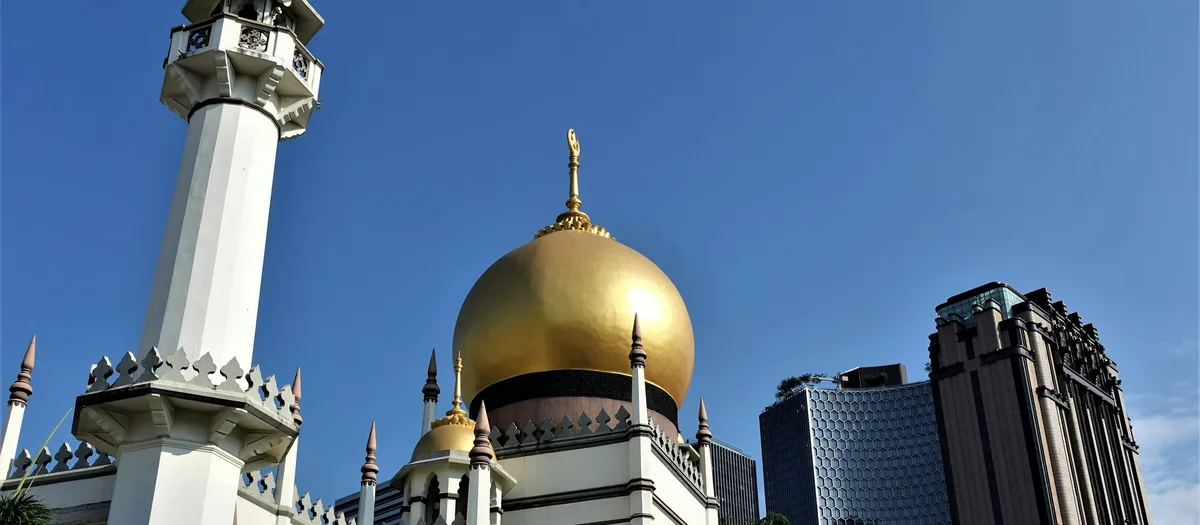
Singapore has a small but well-established Muslim community, and its approach to Islamic inheritance is genuinely different from every other country in this series — not because the Quranic shares change, they never do, but because Singapore's financial system creates two very specific, very common ways for a family's actual wealth to end up outside Faraid entirely, without anyone intending it. If you own CPF savings or an HDB flat — and most Singaporean Muslims own at least one — the local-issues sections below matter as much as the Faraid calculation itself.
Singapore's Legal Framework for Muslim Inheritance
Muslim inheritance in Singapore is governed by the Administration of Muslim Law Act (AMLA), passed in 1966 and in force since 1 July 1968. AMLA gives the Syariah Court jurisdiction over Faraid — under Section 115, the Court issues a Sijil Faraid (Inheritance Certificate) that sets out exactly which heirs are entitled to the estate and what share each receives.
Getting the Sijil Faraid isn't optional admin, it's a required first step. The Family Justice Courts won't grant Probate or Letters of Administration for a Muslim estate until the Inheritance Certificate is in hand, so the religious calculation has to happen before the legal transfer can even start — the reverse order from how it works in most Western jurisdictions.
Sunni and Shia Muslims Inherit Differently — and Singapore's Shafi'i Default
This guide covers Sunni Faraid — the fixed-share and residuary system the overwhelming majority of Singaporean Muslims follow, and the system FaraidHub's calculator applies. Singapore's small Shia minority classifies heirs differently under Shia fiqh; if your family follows Shia jurisprudence, get the calculation from a scholar trained in that system instead.
Within Sunni Islam there's a further wrinkle worth knowing about. The Syariah Court applies the Shafi'i madhab by default, since it's the school most Singaporean Muslims follow — a genuine difference from Pakistan, India and Bangladesh, where Hanafi fiqh is the default. The core Quranic fixed shares (1/2, 1/4, 1/8, 2/3, 1/3 and 1/6) are identical across all four Sunni madhabs; where the schools differ is in narrower technical areas, not the basic entitlements this guide covers. If your family follows a different madhab, the Syariah Court can apply it where there's proof the deceased did too.
CPF Nominations — Singapore's Sharpest Faraid Risk
Here's the risk that catches families off guard more than any other in Singapore. If you've nominated a beneficiary for your CPF (Central Provident Fund) savings, that nomination is paid out directly to the person you named — in full, outside the estate, and completely outside Faraid. It doesn't matter if the nominee isn't a Quranic heir at all, or if the amount doesn't remotely match what Faraid would have given them; a valid CPF nomination overrides the religious calculation entirely.
Without a nomination, the outcome flips completely: the CPF Board transfers the funds to the Public Trustee, who then distributes them according to Faraid like any other asset. For many Singaporean Muslims, CPF savings are one of their largest assets — which means a nomination made years ago, to a person who made sense at the time, can end up silently redirecting a large share of the estate away from Faraid heirs. Review your CPF nomination whenever your family situation changes; don't assume it will simply defer to Faraid if you do nothing.
HDB Flats and Joint Tenancy — When Faraid Doesn't Apply
Most Singaporeans, Muslim or not, live in HDB flats, and how the flat is owned matters as much as who's named on the lease. A flat held in joint tenancy passes entirely to the surviving joint tenant the moment the other owner dies — by right of survivorship, outside the estate, outside Faraid. Many Muslim couples hold their flat this way without realising it means that asset never reaches Faraid distribution at all, regardless of what the Quran specifies. Some families use a Hibah (see whether a spouse can keep the family home this way) as an alternative, Islamically-grounded route to the same practical outcome — worth comparing against joint tenancy with a Syariah-literate advisor.
If the flat is held as tenants-in-common, or the deceased was the sole owner, that share does follow Faraid — subject to HDB's Right of Occupancy Scheme, which lets an eligible family member (typically a spouse, parent or unmarried child who was living there) keep the flat. If no eligible occupier remains, HDB buys the flat back at market value, and that value is distributed to the heirs instead of the property itself.
Getting the Sijil Faraid and Grant of Probate
The process runs in two stages, both of which now largely run online. First, apply for the Sijil Faraid through the Syariah Court Portal using SingPass — the Court identifies the heirs and their shares based on the information you provide. Second, once you have the certificate, apply to the Family Justice Courts for a Grant of Probate (if there's a valid will) or Letters of Administration (if there isn't), which gives the executor or administrator legal authority to collect and distribute the estate's assets. Only after both steps are complete can bank accounts, CPF savings with no nomination, and property be formally transferred.
Worked Example: Faraid Distribution in Singapore
A man dies leaving an estate of SGD 2,000,000 after funeral costs and debts are settled, with no valid Wasiat bequests, no outstanding CPF nomination and no jointly-held property. He is survived by his wife, two sons and one daughter; both his parents predeceased him.
| Heir | Share | Amount |
|---|---|---|
| Wife | 1/8 (fixed — children present) | SGD 250,000 |
| Sons (×2) | Residuary, double the daughter's share each | SGD 700,000 each |
| Daughter | Residuary, half a son's share | SGD 350,000 |
With sons present, the daughter inherits as a residuary alongside her brothers rather than taking a fixed share — the estate splits 2:1 in favour of each son over the daughter, the same ratio the Quran sets everywhere. The wife takes her fixed 1/8 first; what remains — 7/8 of the estate — is divided five ways (2+2+1) between the two sons and the daughter. The total comes to exactly SGD 2,000,000. This is the same Faraid arithmetic used everywhere Sunni Muslims live, Shafi'i or Hanafi; what changes in Singapore is only how the Sijil Faraid gets issued and how CPF and HDB assets get handled separately.
Does a Wasiat Override Faraid in Singapore?
No. A Wasiat can direct up to one-third of the net estate to people outside the Faraid categories — including non-Muslims and adopted or illegitimate children, none of whom have a fixed Quranic share — but it can't give extra to an existing Faraid heir without every other heir's consent. The remaining two-thirds is always distributed under Faraid, regardless of what the Wasiat says.
Practical Checklist for Singaporean Muslim Families
- Register the death and obtain the death certificate.
- Check every CPF nomination and every property's ownership structure (joint tenancy vs tenants-in-common) — these determine what actually falls under Faraid.
- Settle outstanding debts before anything is distributed.
- Carry out any valid Wasiat bequests, within the one-third limit.
- Apply for the Sijil Faraid via the Syariah Court Portal using SingPass.
- Calculate each heir's Faraid share — use the calculator below for the Quranic-shares part.
- Apply to the Family Justice Courts for a Grant of Probate or Letters of Administration once the certificate is issued.
- If an HDB flat has no eligible occupier under the Right of Occupancy Scheme, be prepared for HDB's buy-back process instead of a property transfer.
- Keep the Sijil Faraid, Grant/Letters and calculation with the estate records.
Calculate Your Singaporean Islamic Estate
Use our free Faraid calculator to see each heir's exact Quranic share — then follow Singapore's Sijil Faraid and Grant of Probate process, keeping CPF and HDB rules in mind.
Calculate Now →