Mahr vs. Dowry: Why They're Opposites, Not the Same Thing
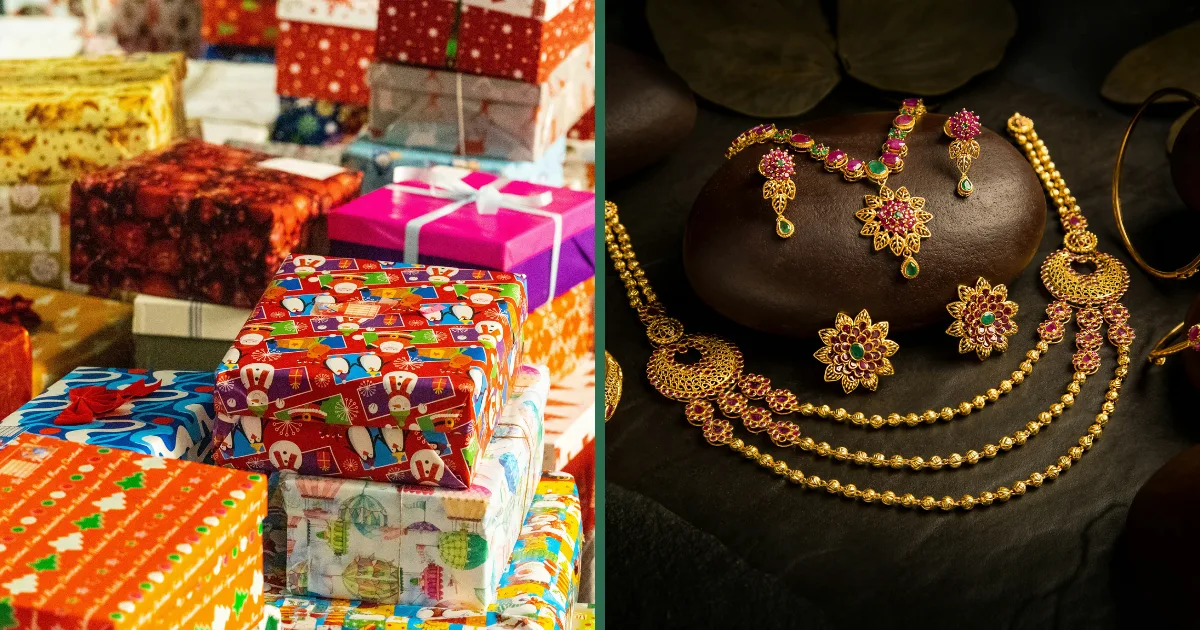
Mahr and dowry are not the same thing — they run in opposite directions. Mahr is paid by the groom to the bride and belongs to her exclusively; it's a right the Quran establishes. A dowry is paid by the bride's family to the groom or his family, a cultural practice with no basis in Islamic law. Confusing the two is one of the most common misconceptions about Muslim marriage.
Two Payments Flowing in Opposite Directions
"Mahr" gets translated into English casually as "dowry" often enough that many people — Muslim and non-Muslim alike — assume the two words describe the same custom. They don't. The clearest way to see the difference is to ask a single question: who pays whom?
| Mahr | Dowry | |
|---|---|---|
| Who pays | The groom | The bride's family |
| Who receives | The bride, personally | The groom or his family |
| Who owns it afterward | The bride exclusively, forever | The groom's side, typically absorbed into shared or his-side assets |
| Religious basis | Mandatory under Islamic law (Quran 4:4) | None in Islam — a cultural, not religious, practice |
| Legal status where practised | An enforceable marital right | Banned or restricted in several countries (e.g. India's Dowry Prohibition Act) due to abuse |
Every row runs opposite. Mahr flows toward the bride and stays with her. Dowry flows toward the groom's side and, in the historical/South Asian cultural practice the word usually refers to, has been linked to serious documented harms — financial pressure on brides' families, and in the worst cases, abuse and violence tied to dowry disputes. These are not parallel customs with different names; they are structurally different transactions.
Why the Two Get Confused
Three things feed the confusion. First, translation: English-language media and even some dictionaries render "Mahr" as "Islamic dowry," a shorthand that obscures the direction-of-payment difference entirely. Second, geography: in South Asia particularly, Islamic marriage customs (which include Mahr) and the separate cultural custom of dowry have coexisted in the same communities for generations, sometimes practised by the same families without a clear line drawn between what's religiously required and what's cultural habit. Third, and most simply, both words describe "money associated with a wedding" to someone unfamiliar with either tradition, which is enough surface similarity for casual conflation.
Does Islam Permit Dowry?
No. There is no mechanism in the Quran or Sunnah for a payment from the bride's family to the groom's side as a condition or custom of marriage. Where dowry demands appear within Muslim communities, they are a pre-existing regional or cultural practice that has attached itself to weddings alongside Islamic marriage requirements — not something derived from Islamic teaching. Many scholars speak against the practice explicitly, precisely because it inverts the Quran's own instruction: Islam obligates a payment to the bride, not a payment extracted from her family.
Understand Your Own Mahr
Read the full picture — Quranic basis, prompt vs. deferred, and what happens if it's never paid.
What Is Mahr? →Who Keeps the Mahr in a Divorce?
This is where the practical consequences of the two systems diverge most sharply. Under a dowry system, disputes often arise over whether dowry payments or goods should be "returned" if a marriage ends — a frequent source of family conflict and, in some jurisdictions, litigation. Under Mahr, the answer is far simpler and heavily favours the wife: if the husband initiates the divorce, the full Mahr — including any deferred portion still owed — remains hers, in addition to being hers already if already paid. Only in a khula (a wife-initiated divorce under specific circumstances) might she agree to return some or all of it, and only by her own choice, never as an automatic obligation.
The Real Comparison Isn't Mahr vs. Dowry — It's Mahr vs. Nothing
The more useful comparison for a couple planning an Islamic marriage isn't "how does Mahr compare to a dowry" — it's simply understanding that Mahr is a right the wife has and a dowry is not a religious requirement at all, whatever a family's regional custom might separately expect. If your family or community practises both Mahr and a dowry-style exchange, it's worth being clear with everyone involved which parts are the actual Islamic obligation (the Mahr, owed to the bride) and which are cultural add-ons the couple is free to decline.