What Is Hajj? The Fifth Pillar of Islam Explained
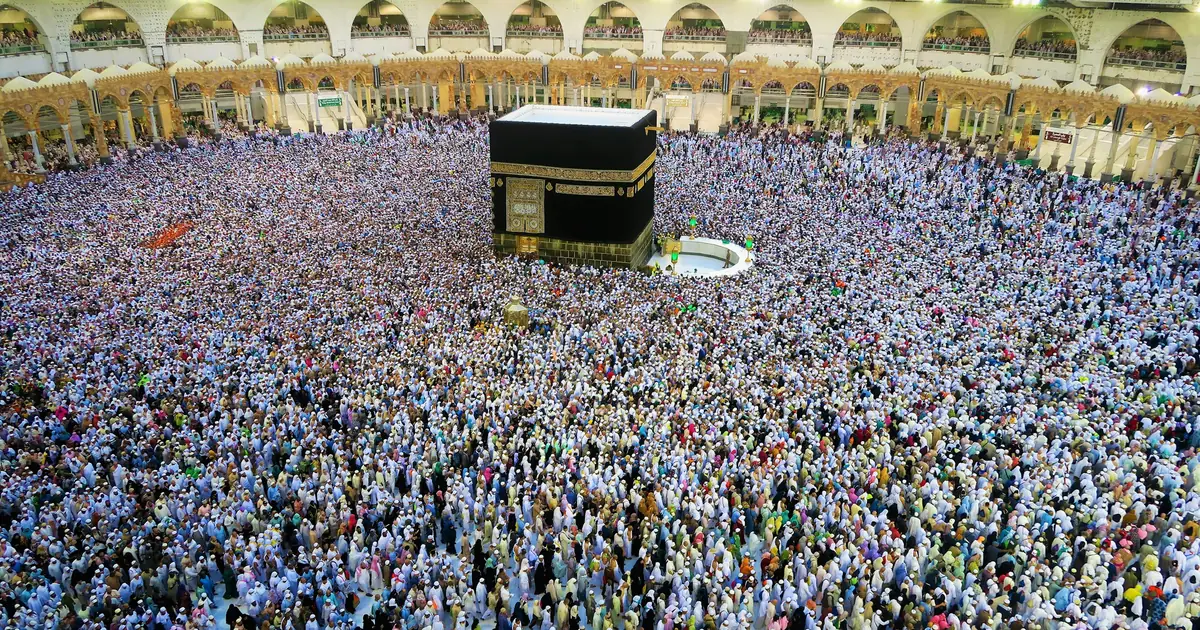
Hajj is the annual pilgrimage to the Kaaba in Makkah, the fifth pillar of Islam, and obligatory once in a lifetime for every adult Muslim who is physically able and financially capable. It takes place over five to six days in the Islamic month of Dhul Hijjah and follows a fixed sequence of rites — Ihram, Tawaf, Sa'i, standing at Arafah — that trace back to the Prophet Ibrahim and his family.
What Is Hajj?
Hajj (حج) is the pilgrimage to the Kaaba in Makkah, performed once a year during the Islamic month of Dhul Hijjah. It is the fifth of the Five Pillars of Islam, alongside the declaration of faith (Shahada), the five daily prayers (Salah), obligatory charity (Zakat), and fasting in Ramadan (Sawm). Unlike the other four pillars, which recur daily, weekly or yearly, Hajj is only obligatory once in a lifetime — and only for those who genuinely meet its conditions.
The Quran states the obligation directly:
وَلِلَّهِ عَلَى النَّاسِ حِجُّ الْبَيْتِ مَنِ اسْتَطَاعَ إِلَيْهِ سَبِيلًا
"Pilgrimage to the House is a duty owed to Allah by people who are able to undertake it." — Surah Aal-e-Imran 3:97. The clause "who are able" is the basis for every condition scholars attach to when Hajj actually becomes obligatory on a person.
Hajj re-enacts events from the lives of the Prophet Ibrahim, his wife Hajar, and their son Ismail — Hajar's search for water between the hills of Safa and Marwah, the well of Zamzam that answered it, and Ibrahim's willingness to submit to Allah's command. Every pilgrim performs the same rites, wears the same simple garments, and stands at the same locations, regardless of nationality or wealth.
Who Must Perform Hajj?
Hajj becomes obligatory (Fard al-Ayn) on a Muslim only once the condition scholars call istita'ah — capability — is genuinely met. In practice, this means:
- Muslim, adult and sane — the basic conditions for any religious obligation.
- Physically able — fit enough to withstand the journey and the physical demands of the rites.
- Financially capable — free of debt, with enough surplus wealth to cover the cost of the journey and to support any dependents left behind while away.
- A safe route — the path to Makkah must be reasonably safe to travel.
For women, the majority of jurists add a further condition — travelling with a mahram (a close male relative) or, in the view of some later scholars, with a trustworthy group where safety is otherwise assured. Positions differ by madhab and by circumstance, so this is a question to raise with a scholar familiar with your own situation rather than something to settle from a general article.
A Muslim who never meets these conditions carries no sin for not performing Hajj — the Quran's own wording ties the obligation to genuine ability, not to intention or desire alone.
Check Where Your Wealth Stands
Istita'ah asks whether you're debt-free with surplus wealth — the same question Zakat asks every year. Work out your Zakat obligation first.
Open the Zakat Calculator →When Is Hajj Performed?
Hajj can only be performed once a year, on fixed dates: the 8th to the 12th or 13th of Dhul Hijjah, the final month of the Islamic lunar calendar. Because the lunar calendar runs roughly 11 days shorter than the Gregorian solar year, Hajj's Gregorian dates shift earlier each year, cycling through every season over about 33 years. This is the single biggest practical difference from Umrah, which can be performed on almost any day of the year — see What Is Umrah? for the full comparison.
The Main Rituals of Hajj — A Brief Overview
Hajj follows a fixed sequence over several days. This is a plain overview of the stages, not a step-by-step how-to — we cover the practical, day-by-day guidance in a dedicated Hajj Guide, coming soon to FaraidHub's Guides section.
- Ihram — the sacred state a pilgrim enters at or before a set boundary point (Miqat), marked by simple garments (two unstitched white cloths for men, modest everyday clothing for women) and a specific intention.
- Tawaf al-Qudum — seven circuits around the Kaaba on arrival in Makkah.
- Sa'i — walking seven times between the hills of Safa and Marwah, re-enacting Hajar's search for water.
- Standing at Arafah — the 9th of Dhul Hijjah, widely considered the single most essential rite; a hadith states plainly, "Hajj is Arafah" (Tirmidhi).
- Muzdalifah — an overnight stay under open sky after leaving Arafah.
- Stoning the Jamarat — throwing pebbles at three pillars in Mina, symbolising the rejection of temptation.
- Sacrifice (Qurbani) — an animal offering, connected to the same day as Eid al-Adha.
- Tawaf al-Ifadah and Tawaf al-Wada — a further circuit of the Kaaba completing the pilgrimage, and a farewell circuit before departure.
The Three Types of Hajj
Pilgrims declare one of three intentions when entering Ihram, depending on how they combine Hajj with Umrah:
- Ifrad — Hajj performed alone, with no Umrah combined.
- Tamattu — Umrah performed first, followed by a break out of Ihram, then a fresh Ihram for Hajj later in the same trip. The most common choice for pilgrims travelling from outside Saudi Arabia.
- Qiran — Hajj and Umrah combined under a single, continuous Ihram.
Tamattu and Qiran both require an animal sacrifice that Ifrad does not, since combining the two rites in one journey is treated as a favour requiring gratitude.
Hajj vs. Umrah: What's the Difference?
The two are often confused because they share several of the same rites — Ihram, Tawaf, Sa'i — performed at the same location. The differences that actually matter:
- Obligation: Hajj is obligatory once in a lifetime for those who meet istita'ah. Most scholars hold Umrah is strongly recommended, not obligatory.
- Timing: Hajj only happens on fixed dates in Dhul Hijjah. Umrah can be performed almost any time of year.
- Duration and scope: Hajj takes five to six days and includes Arafah, Muzdalifah and Mina. Umrah takes a few hours and ends after Tawaf, Sa'i and cutting the hair.
- Status: Hajj is one of the Five Pillars of Islam. Umrah is not.
For the full picture on Umrah's own rulings and rituals, see What Is Umrah?
Why Hajj Matters
Hajj is often described as the physical culmination of a Muslim's faith — a journey that strips away the markers of wealth and status other pilgrimages don't touch. Every pilgrim wears the same plain garments and performs the same rites standing beside strangers from every country on earth, a deliberate levelling built into the ritual itself.
The reward attached to a sincerely performed Hajj is stated directly in a well-known hadith: "Whoever performs Hajj for the sake of Allah and does not commit any obscenity or transgression will return as sinless as the day his mother bore him" (Sahih al-Bukhari). For many Muslims who complete it, Hajj marks a turning point — not an end point — in how they practise their faith afterward.
Hajj, Wasiyyah and the Estate: What Happens If You Never Went?
Hajj's obligation doesn't end at death. A woman from the tribe of Juhaynah once asked the Prophet ﷺ about her mother, who had vowed to perform Hajj but died before doing so. He told her to perform it on her mother's behalf, adding: "If your mother had a debt, would you not pay it? Pay the debt of Allah, for Allah's debt deserves more to be paid" (Sahih al-Bukhari). This hadith is the basis for Badal Hajj — Hajj performed by a proxy on behalf of someone who met istita'ah but died before going.
Because it's treated as a debt rather than a discretionary bequest, the majority view is that funding a Badal Hajj comes out of the estate before Wasiyyah and Faraid are even calculated — the same first-priority treatment given to funeral costs and ordinary debts. See What Is Paid Before Inheritance? for the full order.
Separate from an unfulfilled obligation, a Muslim can also use their Wasiyyah — within the normal 1/3 cap — to fund Hajj for a loved one who couldn't otherwise afford it, or to fund further voluntary Hajj trips after their own obligatory Hajj is already fulfilled. Wasiyyah can't benefit someone already entitled to a fixed Faraid share without the other heirs' consent, so this route works best for a grandchild, in-law, or friend rather than a spouse or child. Funding someone else's Hajj this way, whether during your lifetime or through a will, is also commonly counted as Sadaqah Jariyah — the reward keeps accruing to you as that pilgrim's trip continues to shape their life long after the money has changed hands.