What Is Umrah? The Lesser Pilgrimage Explained
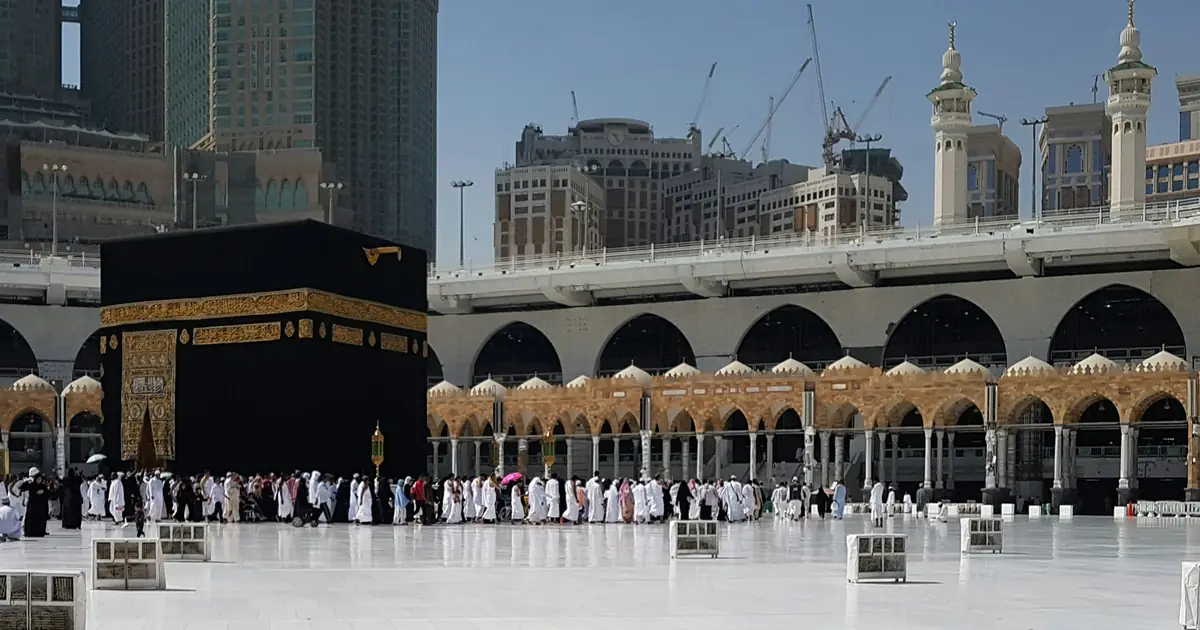
Umrah is a pilgrimage to the Kaaba in Makkah that can be performed at almost any time of year, unlike Hajj, which is fixed to a few days in Dhul Hijjah. The Hanafi and Maliki schools consider it strongly recommended rather than obligatory; the Shafi'i and Hanbali schools hold it is required once in a lifetime. Its rites — Ihram, Tawaf, Sa'i, and cutting or trimming the hair — take only a few hours to complete.
What Is Umrah?
Umrah (عمرة) is a pilgrimage to the Kaaba in Makkah, built from a shorter set of rites than Hajj and free of Hajj's fixed calendar. It's sometimes called the "lesser pilgrimage," which describes its length compared to Hajj, not a lesser status — Umrah is a complete, independent act of worship, not a scaled-down substitute for the fifth pillar. Unlike Hajj, Umrah is not one of the Five Pillars of Islam.
Where Hajj can only be performed once a year on fixed dates, Umrah can be performed on almost any day of the year, in a single afternoon if a pilgrim moves at a normal pace. That flexibility is the main reason many Muslims perform Umrah several times in a lifetime, while Hajj is only obligatory once.
Is Umrah Fard or Sunnah?
This is one of the genuine points of disagreement between the four Sunni madhabs, not a settled question with one universal answer:
- Hanafi and Maliki schools: Umrah is Sunnah Mu'akkadah — a strongly emphasised, highly recommended act, but not obligatory.
- Shafi'i and Hanbali schools: Umrah is Wajib (obligatory) once in a lifetime, resting on a reading of the verse below as commanding Hajj and Umrah together, not Hajj alone.
وَأَتِمُّوا الْحَجَّ وَالْعُمْرَةَ لِلَّهِ
"And complete the Hajj and Umrah for Allah." — Surah Al-Baqarah 2:196. Scholars who hold Umrah obligatory read this instruction as covering both acts equally; those who hold it recommended read "complete" as applying to Umrah only once it has been started, not as commanding that it be started in the first place.
Because the difference between schools is real, check the position of your own madhab, or ask a scholar, rather than assuming either view applies to you by default.
Umrah vs. Hajj: What's the Difference?
- Obligation: Most scholars hold Umrah is recommended, not obligatory. Hajj is obligatory once in a lifetime for those who meet istita'ah — see What Is Hajj? for the full conditions.
- Timing: Umrah can be performed almost any time of year. Hajj only happens on fixed dates in Dhul Hijjah.
- Duration and scope: Umrah takes a few hours and ends after Tawaf, Sa'i and cutting the hair. Hajj takes five to six days and includes standing at Arafah, an overnight at Muzdalifah, and stoning the Jamarat at Mina — stages Umrah does not include.
- Status: Hajj is one of the Five Pillars of Islam. Umrah is not.
When Can You Perform Umrah?
Umrah can be performed on almost any day of the year, which is exactly what separates it from Hajj in practice. Pilgrims following the Tamattu form of Hajj combine the two on one trip, performing Umrah first and then waiting for Hajj's own dates later in the same journey — see What Is Hajj? for how that combination works.
One period carries particular weight: a hadith states that "Umrah in Ramadan is equivalent to Hajj" in reward (Sahih al-Bukhari, Sahih Muslim). This describes the reward attached to performing Umrah during that month — it does not replace or exempt anyone from the separate obligation of Hajj itself.
Settle What You Owe First
Umrah is voluntary, so scholars generally advise clearing debts and Zakat before spending on a trip that isn't obligatory. Check your Zakat position first.
Open the Zakat Calculator →The Rituals of Umrah — A Brief Overview
Umrah's rites are a subset of Hajj's, performed on their own without the Arafah, Muzdalifah or Mina stages. This is a plain overview, not a step-by-step how-to — a dedicated Umrah Guide with full practical instructions is coming soon to FaraidHub's Guides section.
- Ihram — entering the sacred state at or before the Miqat boundary point, with the specific intention of Umrah.
- Tawaf — seven circuits around the Kaaba.
- Sa'i — walking seven times between the hills of Safa and Marwah.
- Halq or Taqsir — shaving the head or trimming the hair, which completes the rites and ends the state of Ihram.
Once you enter Ihram with the intention of Umrah, the rites above are no longer optional to complete in order — beginning Umrah is voluntary in the majority view, but finishing it correctly, once started, is not. A pilgrim who genuinely cannot continue — due to illness or another real barrier — generally needs to exit Ihram through a recognised process, which can involve a compensatory offering (fidyah); this is a question for a scholar, not something to decide informally mid-pilgrimage.
The Reward of Umrah
A well-known hadith ties repeated Umrah to the forgiveness of minor sins: "The performance of Umrah is an expiation for the sins committed between it and the previous Umrah" (Sahih al-Bukhari, Sahih Muslim). This is one of the reasons many Muslims who can afford to travel choose to perform Umrah more than once, rather than treating a single pilgrimage as sufficient for a lifetime.
Umrah, Wasiyyah and Sadaqah Jariyah
Because Umrah isn't tied to a fixed calendar or Hajj's larger cost, it's a common way for a Wasiyyah to help a loved one who couldn't otherwise travel — a Muslim can allocate part of their 1/3 Wasiyyah cap specifically to fund someone's Umrah, the same way a will can fund Hajj (see What Is Hajj?). As with any Wasiyyah, it can't reach someone already entitled to a fixed Faraid share unless the other heirs agree. Money given to a family member for Umrah while you're both alive is a different instrument entirely — that's Hibah, a lifetime gift, not a Wasiyyah bequest.
Sponsoring someone else's Umrah, in life or through a will, is widely counted as Sadaqah Jariyah — you keep earning reward as their trip and its effects continue to unfold. Some scholars also permit performing Umrah on behalf of a deceased relative and dedicating its reward to them, generally treated as voluntary charity rather than debt-clearing, since most schools don't hold Umrah obligatory. Under the Shafi'i and Hanbali position that Umrah is Wajib once in a lifetime, an unperformed Umrah can carry the same debt-like priority as Badal Hajj — paid from the estate before Wasiyyah and Faraid — see What Is Hajj? for how that mechanism works.